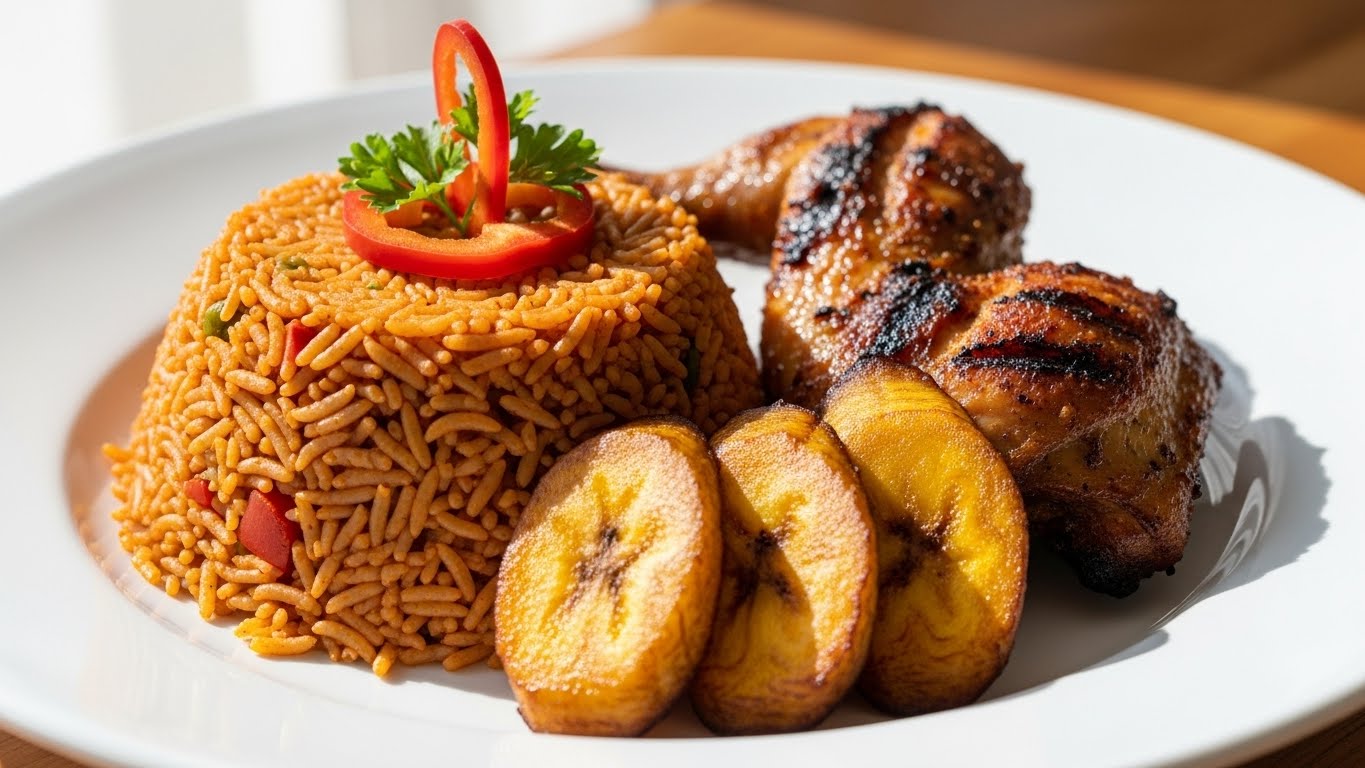
Essential Ingredients for Authentic Flavor Profile
Core components and functional roles
- Long-grain parboiled rice: Boasts the optimal starch composition for perfect grain separation, crucial for achieving the desired texture.
- Tomato trifecta: A combination of fresh tomatoes, red bell peppers, and tomato paste forms the flavor foundation, leveraging the Maillard reaction for depth.
- Flavor catalysts: Onions contribute through sugar caramelization, scotch bonnet peppers balance heat with capsaicin, and stock enhances the dish with rich proteins.
Preparation Protocol and Equipment Selection
To achieve the authentic taste and texture of Nigerian Jollof rice, precise preparation and the right equipment are key.
- Ingredient prep sequence: Ensure uniform vegetable dicing for even cooking, and rinse rice thoroughly to remove excess starch.
- Critical tools: Use a heavy-based pot to leverage its thermal mass, preventing hotspots and ensuring consistent cooking. A wooden spoon is ideal for non-reactive stirring.
- Thermodynamic principle: The pot’s thickness is crucial to avoid hotspots, allowing for even heat distribution.
Authentic Nigerian Jollof Rice Recipe: Step-by-Step Cooking Method
Stew base development phase
- Oil heating parameters: Heat oil to just below its smoke point to preserve its integrity and flavor.
- Tomato paste frying duration: Fry until the oil separates, an indicator of perfect paste caramelization.
- Fresh blend integration: Add the fresh tomato and pepper blend, allowing it to reduce in viscosity through evaporation for a concentrated flavor base.
Rice integration and controlled simmering
- Parboiled rice hydration protocol: Ensure the rice is adequately hydrated before adding to the stew base.
- Liquid-to-rice ratios: Use the absorption method to calculate liquid needs, ensuring the rice cooks evenly and absorbs all flavors.
- Lid sealing techniques: Properly sealing the pot with a lid retains heat and steam, crucial for the rice’s final texture.

Texture finalization
Once the rice has absorbed the liquid and flavors, fluff it gently with a fork to prevent clumping and enhance texture. Allow a final rest with the lid on to consolidate the flavors.
This guide on how to make Jollof rice ensures you can replicate the authentic taste of Nigerian cuisine in your own kitchen. Explore more about Nigerian dishes by checking out our culinary guides or learn about the variations of Jollof rice across West Africa in this article.
For more insights into the cultural significance of Jollof rice, you can visit BBC Travel.