Welcome to Tastebudz: Your Culinary Journey Begins
Starting culinary school is an exciting milestone. At Tastebudz, we understand that the first week can be overwhelming. Remember, feeling nervous is normal, but excitement is greatly encouraged. You’re about to embark on a journey of flavors that will enrich your culinary skills and ignite your passion for cooking.
Navigating the First Day of Culinary School
The first week at culinary school is designed to build confidence, introduce kitchen structure, and prepare students for hands-on learning.
- Introductions and Orientation: You’ll meet your fellow students and get acquainted with the Tastebudz community. This is your opportunity to make new friends and start building connections.
- Meeting Your Instructors: Our experienced chefs will introduce themselves and share their culinary journey, inspiring you with their passion and expertise.
- Understanding the Curriculum: Get a comprehensive overview of the courses you’ll be taking and the skills you’ll develop. Each class is designed to build your knowledge and confidence in the kitchen.
- Touring the Kitchens and Facilities: Familiarize yourself with our state-of-the-art kitchens and resources, ensuring you’re comfortable and ready for hands-on learning.
Essential Paperwork & Logistics
- Registration and ID Cards: Ensure all your paperwork is in order. Your ID card is crucial for accessing school facilities and resources.
- Understanding Student Resources: Explore the student portal and resources available to support your learning journey.
- Safety Protocols Overview: Safety is paramount in the kitchen. Learn about the protocols to ensure a safe and productive learning environment.
What You’ll Be Cooking in Week One
Your first week is packed with foundational skills that will set you up for success:
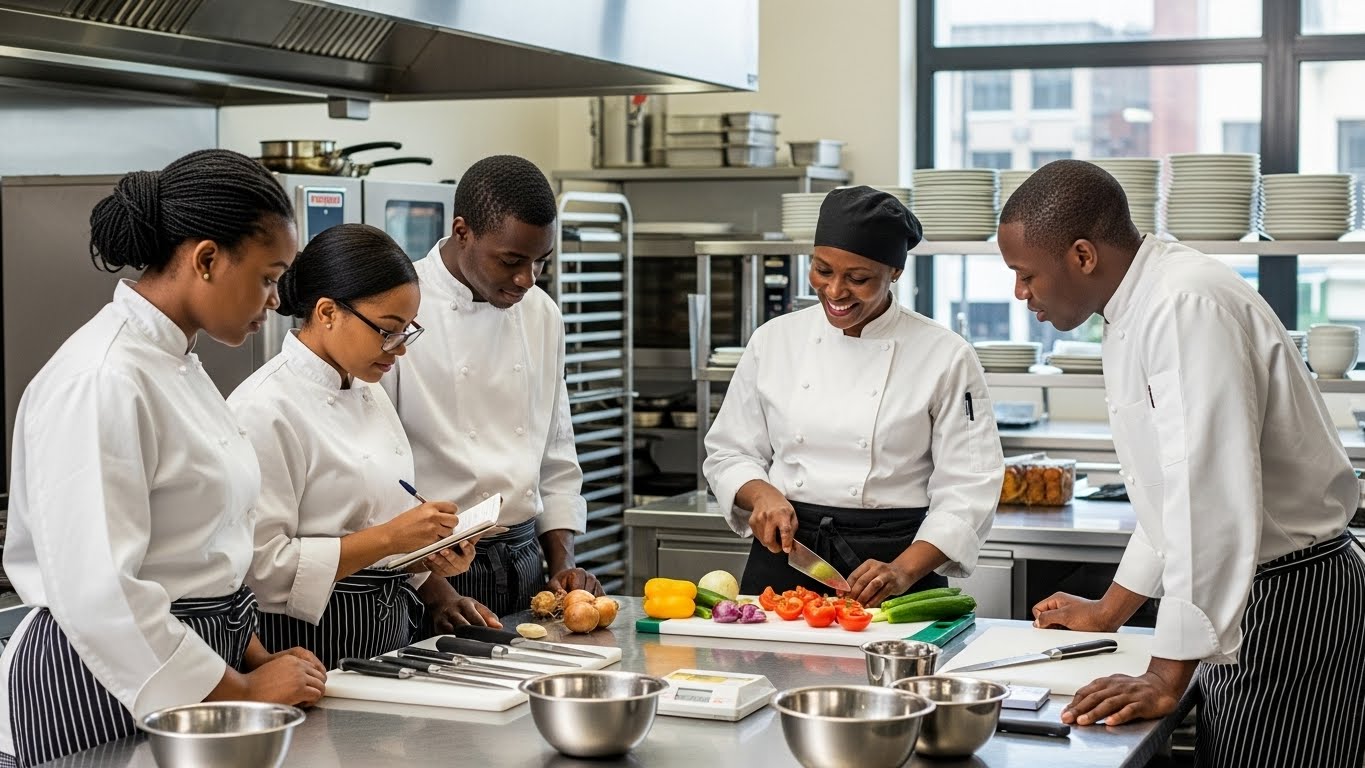
- Knife Skills 101: Mastering basic cuts like dice, mince, and julienne is essential. Remember, safety first!
- Introduction to Stocks and Sauces: Discover the art of building flavor foundations and uncover the secrets of the mother sauces.
- Baking Basics: Dive into the world of baking by understanding measurements and trying out simple bread recipes.
Key Culinary School Equipment You’ll Use
Get comfortable with the tools of the trade:
- Knives: Become familiar with different types of knives and their uses, an essential skill for any chef.
- Pots and Pans: Learn how to choose the right cookware for various cooking techniques.
- Ovens and Stoves: Understanding the operation of these appliances is crucial for effective cooking.
Understanding Culinary Terminology
Build your food vocabulary by decoding common culinary terms. This knowledge will enhance your ability to follow recipes and communicate effectively in the kitchen.
Common Mistakes & How To Avoid Them
Every chef makes mistakes, but here are some to watch out for and tips to avoid them:
- Cutting Yourself: Always practice safe knife techniques to prevent injuries.
- Burning Food: Master temperature control to ensure perfectly cooked dishes.
- Improper Seasoning: Taste, taste, taste! Regularly tasting your food is key to achieving the right balance of flavors.
FAQs About Your First Week At Culinary School
- What should I wear to culinary school? Comfortable, professional attire is recommended. Don’t forget your chef’s hat and apron!
- What supplies do I need to bring? Your school will provide a list of essential supplies. Typically, this includes knives, notebooks, and measuring instruments.
- Will I be doing a lot of tasting? Absolutely! Tasting is a critical part of the learning process.
- What if I’m a complete beginner? No worries! Our curriculum is designed to cater to all skill levels, from novice to advanced.
Tips for Success in Culinary School
- Practice, Practice, Practice! The more you practice, the more proficient you’ll become.
- Ask Questions: No question is silly. Your instructors are there to help you learn.
- Collaborate with Your Classmates: Teamwork is vital in a kitchen setting.
- Stay Organized and Keep Notes: Documenting your learnings will aid in your study and revision.
- Embrace Constructive Criticism: Feedback is a gift that helps you improve.
- Read and research outside of class. (See this guide to classic cookbooks from Serious Eats.)
Your Culinary Future Starts Now
The first week at culinary school lays the foundation for your entire culinary education, helping you develop discipline, confidence, and essential kitchen skills. With dedication and passion, the culinary world is yours to explore. Continue learning and experimenting with new techniques and flavors. The journey doesn’t end here; it only begins.
Ready to Take the Next Step?
Explore our culinary programs and take the first step towards an enriching culinary career. Browse our courses at Tastebudz. Looking for amazing catering? Contact us today for your event.