
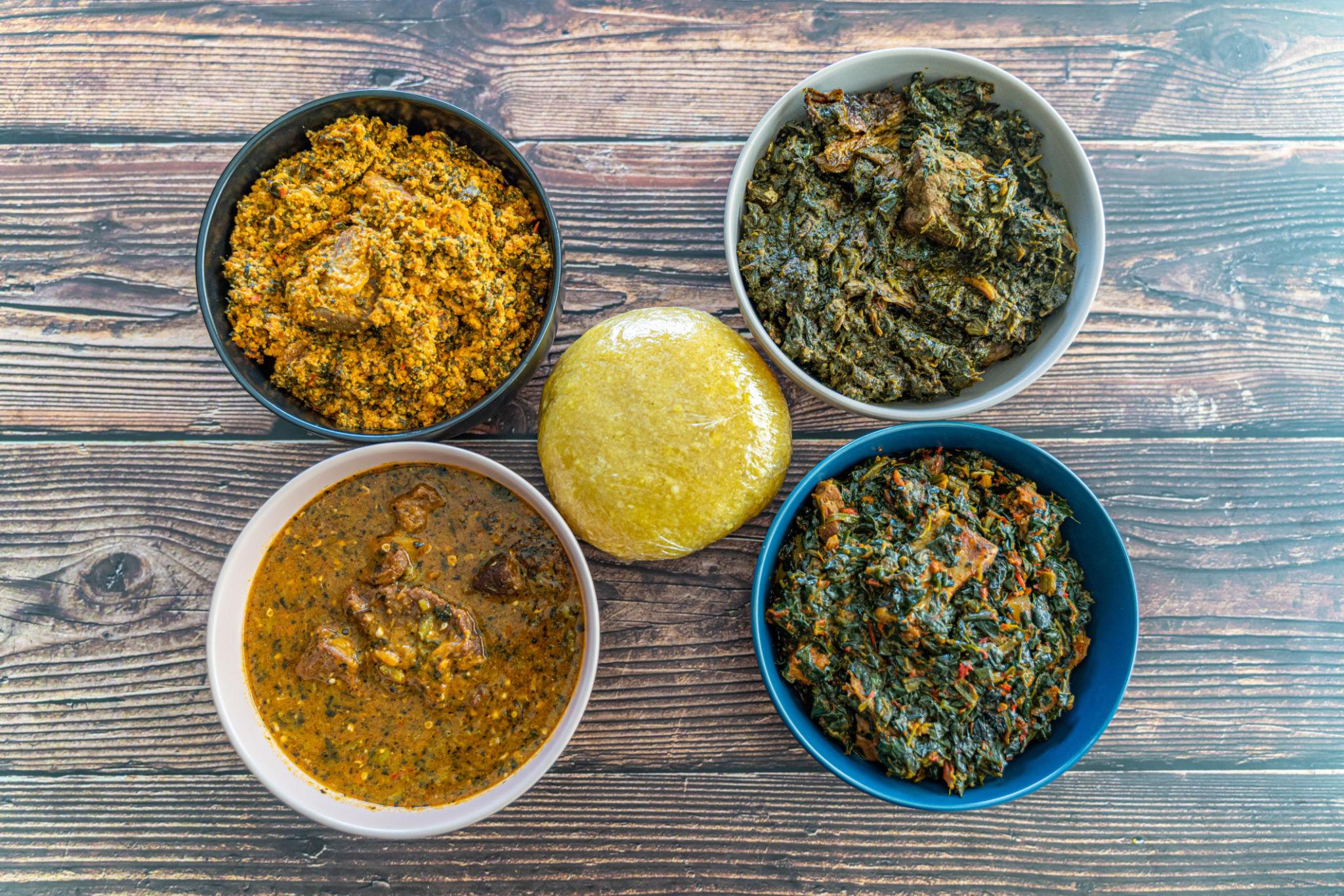
Essential Nigerian Soup Foundations
Scientific Principles of Traditional Soups
Traditional Nigerian soups rely heavily on thickening agents such as seed pastes and leaf mucilages. These agents function through starch gelatinization and pectin interaction, creating the desired texture and consistency. Understanding the protein denaturation thresholds for various meats is crucial, as different proteins require specific simmering durations to achieve tenderness without overcooking. Additionally, flavor layering is achieved through the sequential extraction of fat-soluble compounds, such as the carotenoids in palm oil, which enhance the depth and richness of the soups.
Comprehensive Soup Preparations
Egusi Soup
Egusi soup is a staple in Nigerian cuisine, known for its rich and nutty flavor. The function of melon seed lipids in emulsion formation is key to its creamy texture. Begin by methodically grinding the melon seeds and hydrating them before cooking. Maintaining critical temperature control is essential to ensure the stability of palm oil, a primary ingredient in egusi soup.
Ogbono Soup
Ogbono soup is characterized by its unique viscosity, thanks to the Irvingia gabonensis seed mucilage activation mechanics. Efficient blending techniques are vital to achieve the right consistency. To avoid curdling, it’s important to understand the principles of casein protein interaction avoidance during preparation.
Bitterleaf Soup (Ofe Onugbu)
Bitterleaf soup, or Ofe Onugbu, requires careful alkaloid reduction through controlled leaching processes. A multi-stage bitterleaf pretreatment methodology helps in achieving the desired taste and reducing bitterness. Cocoyam paste is used to optimize viscosity, creating a hearty and satisfying soup.
Vegetable Soup (Edikaikong)
Edikaikong, a vibrant vegetable soup, involves proper leafy vegetable wilt sequencing to retain nutrients and color. Optimizing protein fiber breakdown ensures the meats are tender while the osmotic dehydration principles are applied for dried seafood, enhancing the flavor profile.
Oha Soup
Oha soup’s unique texture comes from the pectin extraction in cocoyam versus achi thickeners. Preserving oha leaf mucilage during thermal exposure is crucial for maintaining its signature texture. The soup’s umami flavor is enhanced through the extraction of compounds from dried fish.
Okra Soup
Okra soup is known for its slimy texture, controlled by Abelmoschus esculentus pectin release. Minimizing shear stress during stirring helps maintain the desired viscosity, while controlled evaporation modulates thickness.
Efo Riro
Efo Riro is a richly flavored spinach stew, balancing spices and herbs to create a savory dish. Understanding the role of fat-soluble vitamins in spinach and optimizing oil absorption techniques enriches the stew, making it a favorite among Nigerian soups.
For more detailed recipes and cooking tips, explore our Nigerian soups collection and our cooking tips section. To further understand the science behind these traditional recipes, consider exploring culinary science resources such as Culinary Science.