How to Make Nigerian Street Food at Home: Essential Techniques
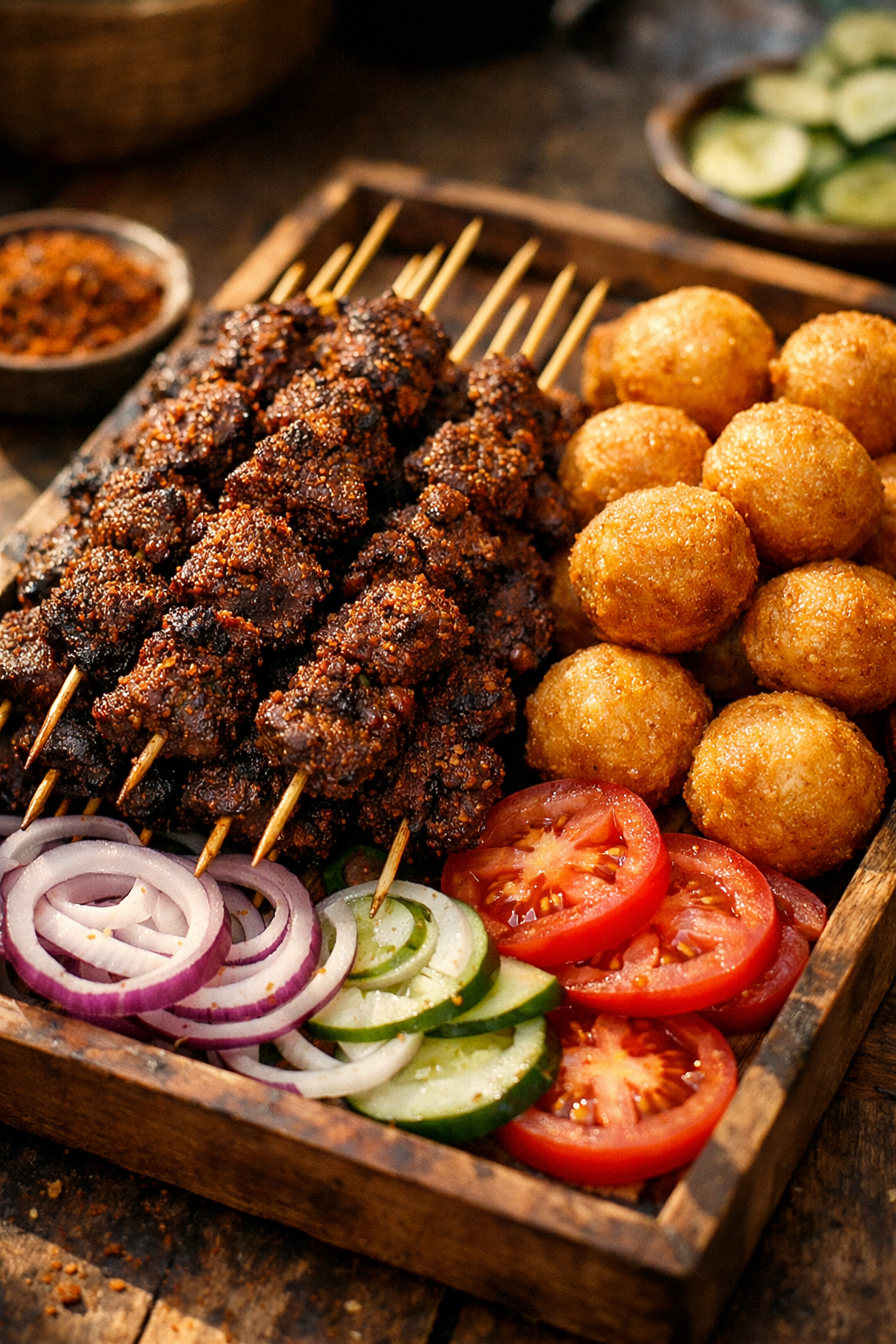
If you want to master how to make Nigerian street food at home, focus on techniques like grilling for suya and proper oil temperature for puff-puff. Street food in Nigeria is not merely sustenance; it is a study in flavor extraction and textural contrast. The characteristic profile smoky, spicy, savory, and sweet relies heavily on the freshness of ingredients and the precise application of heat. For instance, the intense heat used in grilling suya creates a crispy exterior while retaining moisture within the muscle fibers of the meat, a technique central to Nigerian culinary practice.
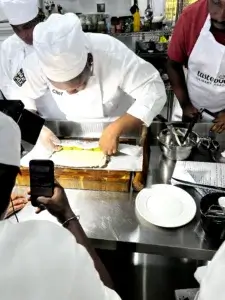
To achieve professional results, one must understand the variables involved. The smoky flavor often associated with street-style cooking is the result of the pyrolysis of lignin in wood or the caramelization of tomato bases in stew. Authentic preparation requires specific tools and ingredients to replicate these environmental conditions. For those seeking to deepen their understanding of these processes, culinary training offers structured pathways into the science of these cooking methods.
Recipe 1: How to Make Suya at Home

Suya is a Hausa-derived dish consisting of thinly sliced meat that is skewered and grilled. The primary flavor driver is Yaji, a dry spice rub comprising ground peanuts, chili peppers, and complex aromatics. The lipids in the peanut oil act as a solvent for the fat-soluble flavor compounds, ensuring adherence to the meat substrate.
Recipe Details: Nigerian Beef Suya
- Prep Time: 45 minutes (plus marinating)
- Cook Time: 15–20 minutes
- Total Time: 1 hour 5 minutes
- Servings: 4 people
- Difficulty: Medium
Ingredients Needed
For the Meat
- Beef flank or skirt steak: 1kg (thinly sliced against the grain)
- Vegetable oil: 2 tablespoons
For the Yaji Spice Mix
- Dry roasted peanuts (ground): 2 cups
- Cayenne pepper: 1 tablespoon (adjust for heat preference)
- Ginger powder: 1 teaspoon
- Garlic powder: 1 teaspoon
- Onion powder: 1 teaspoon
- Stock cubes (crushed): 2 teaspoons
- Salt: 1 teaspoon
Serving Suggestions
- Sliced onions, tomatoes, and cabbage: To taste
Equipment Needed
- Mortar and pestle or food processor (for reducing peanut particle size)
- Wooden or metal skewers (soaked if wood to prevent combustion)
- Grill (charcoal provides authentic smoke compounds) or oven broiler
Step-by-Step Instructions
- Prepare the Yaji: Process the roasted peanuts until they reach a fine, sand-like texture. In a separate bowl, combine the ground peanuts with cayenne, ginger, garlic powder, onion powder, crushed stock cubes, and salt. Ensure homogenous distribution of the spices.
- Marinate the Beef: Coat the sliced beef in vegetable oil to minimize surface dehydration. Add a small portion of the Yaji mix to the meat, ensuring full coverage. Allow the mixture to sit for 30 minutes to facilitate osmotic absorption of flavors.
- Thread the Skewers: Pierce the meat strips along the grain fibers and thread tightly onto the skewers. Tight packing minimizes surface area exposure, retaining more intramuscular moisture during the cooking phase.
- Grill the Suya: Place skewers over medium-high heat (approximately 375°F/190°C). Cook for 5–7 minutes per side. The goal is to render the fat and induce browning without carbonizing the exterior. If using an oven broiler, utilize the high-rack setting and rotate frequently.
- Dip and Serve: Immediately remove from heat. While the meat is still hot and lipids are fluid, dip the skewers into the remaining dry Yaji mix. The residual oil will act as a binding agent for the second layer of spice. Serve with fresh onions and tomatoes to provide a moisture contrast.
Suya Cooking Tips
The structure of the meat is critical. Flank steak possesses long muscle fibers; slicing thinly against the grain shortens these fibers, reducing chewiness. Furthermore, charcoal grilling introduces guaiacol and syringol—compounds responsible for the “smoky” flavor notes—though an oven broiler can simulate the high heat required for the Maillard reaction.
Recipe 2: Authentic Nigerian Puff-Puff

Puff-Puff is a deep-fried dough leavened by yeast bioprocessing. The ideal texture features a gelatinized interior encased in a caramelized crust. The scientific key here is the fermentation of sugars by Saccharomyces cerevisiae, producing carbon dioxide which creates the cellular structure within the batter.
Recipe Details: Puff-Puff
- Prep Time: 1 hour 30 minutes (includes rising)
- Cook Time: 20 minutes
- Total Time: 1 hour 50 minutes
- Servings: 10–12 people
- Difficulty: Easy
Ingredients Needed
- All-purpose flour: 2 cups (or a 1:1 blend of wheat and white flour)
- Instant yeast: 2 teaspoons (active dry yeast is an acceptable substitute)
- Granulated sugar: ½ cup (hygroscopic agent for browning)
- Nutmeg (ground): 1 teaspoon
- Salt: 1 pinch (controls yeast rate and enhances flavor)
- Lukewarm water: 1 ½ cups (temperature critical for yeast activation)
- Vegetable oil: For deep frying (high smoke point required)
Equipment Needed
- Deep heavy-bottomed pot or fryer
- Mixing bowl
- Whisk or wooden spoon
- Absorbent paper towels
- Ice cream scoop or dampened hands
Step-by-Step Instructions
- Mix Dry Ingredients: Sift the flour to incorporate air. Combine with sugar, yeast, nutmeg, and salt in a large mixing vessel. Uniform distribution of yeast is vital for consistent fermentation.
- Add Water: Gradually introduce lukewarm water (approximately 100°F/38°C) while mixing. The hydration goal is a thick, viscous batter. It should possess higher viscosity than pancake batter to retain gas bubbles but be fluid enough to drop from a spoon.
- Let it Rise: Cover the mixture to prevent surface drying and store in a warm environment (75°F–85°F). Allow fermentation to proceed for 60–90 minutes. The batter should approximately double in volume due to CO2 production, and surface bubbles indicate active yeast metabolism.
- Heat the Oil: Heat oil to 350°F (175°C). If the temperature is too low, the dough will absorb excess oil; if too high, the exterior will burn before the interior is cooked through. A small drop of batter should sizzle and rise immediately.
- Fry the Puff-Puff: Scoop a portion of batter using an ice cream scoop or oiled hand. Carefully lower it into the hot oil to avoid splashing. Maintain space between portions to ensure even thermal circulation.
- Golden Brown: Fry for 3–5 minutes, turning continuously. The finished product should exhibit a uniform golden-brown coloration resulting from sugar caramelization. Remove and drain on paper towels to remove excess surface lipids.
Variations and Serving Ideas
While the traditional recipe relies on nutmeg, vanilla extract or banana essence can be added to the aqueous phase to alter the aromatic profile. For a dessert variation, dusting with powdered sugar introduces immediate sensory sweetness.
Food Safety and Hygiene for Home Chefs
For those operating within a commercial context or aspiring to professional standards, adherence to safety protocols is mandatory. In Nigeria, the HACCP (Hazard Analysis and Critical Control Points) system serves as the systematic preventative approach to food safety. This system is regulated under NAFDAC food hygiene regulations. Unlike voluntary certifications for smaller entities, strict compliance with NAFDAC guidelines is required for food businesses, especially those involved in export or federal regulation.
Key control points include maintaining critical temperature controls to inhibit bacterial growth and establishing rigorous recall procedures. Proper documentation is required to trace ingredients and monitor safety compliance. Furthermore, for those constructing or upgrading commercial kitchen facilities to prepare these Nigerian street food recipes, it is vital to note that smoke barriers between suites must be continuous, sealed, and constructed using rated materials. Best practices include the use of 1–2 layers of 5/8” Type X drywall and 20-minute fire-rated, self-closing doors. All penetrations must be sealed with approved firestop products like 3M CP-25WB+ to ensure fire safety compliance.
Preventing Cross-Contamination
When handling raw meat for suya, separate cutting boards and utensils must be utilized to prevent pathogen transfer to ready-to-eat foods such as the onions and tomatoes served alongside. Cross-contamination is a primary vector for foodborne illness. Additionally, temperature control during the cooling phase of puff-puff is essential; fried foods must be cooled to ambient temperature efficiently before storage in refrigeration to prevent condensation and microbial growth.
Conclusion
Now that you know how to make Nigerian street food at home, you can recreate authentic flavors in your own kitchen with confidence. Replicating Nigerian street food recipes in a domestic or professional kitchen requires a balance of art and science. From the fermentation dynamics of the puff puff recipe to the thermal rendering required to make suya at home, success lies in understanding the underlying chemical processes. Tastebudzng.com remains dedicated to empowering chefs and caterers with the knowledge to execute these dishes with authenticity and safety precision. Whether for personal enjoyment or event catering, mastery of these techniques connects the cook to the rich culinary heritage of Nigeria. For further reading on food safety regulations, please refer to official NAFDAC guidelines.