Nigeria’s food industry presents significant opportunities for entrepreneurs, from catering services and bakeries to food processing companies and packaged food brands. As consumer demand for safe, convenient, and high-quality food products continues to grow, businesses that prioritize compliance and quality standards are better positioned for long-term success.However, starting a food business involves much more than having excellent cooking skills. Entrepreneurs must understand regulatory requirements, food safety practices, operational procedures, and quality management systems that protect consumers and support business growth.
This guide explores the essential requirements for building a compliant and sustainable food business in Nigeria.
Understanding the Nigerian Food Industry
The Nigerian food sector is one of the country’s most dynamic industries. Rapid urbanization, changing consumer lifestyles, and increasing demand for processed and ready-to-eat foods have created opportunities for both small-scale and large-scale food entrepreneurs.Whether you plan to operate a catering business, bakery, food processing facility, meal-prep service, or packaged food brand, establishing strong compliance and operational systems from the outset is critical.Businesses that prioritize food safety, quality control, and regulatory compliance often gain greater customer trust and are better positioned to attract corporate clients, distributors, and retail partners.
Why Food Business Compliance Matters
Food businesses operate within a highly regulated environment because public health is directly affected by food quality and safety.
Failure to comply with applicable regulations can lead to:
- Product recalls
- Regulatory sanctions
- Loss of customer confidence
- Business interruptions
- Reputational damage
Compliance should therefore be viewed as a strategic business investment rather than a regulatory obligation alone. A compliant food business demonstrates professionalism, accountability, and a commitment to consumer safety.
Understanding NAFDAC’s Role
The National Agency for Food and Drug Administration and Control (NAFDAC) regulates food products and food manufacturing activities in Nigeria.According to the official NAFDAC guidelines, the agency is responsible for regulating the manufacture, importation, exportation, distribution, advertisement, sale, and use of food products within Nigeria.Businesses involved in food production may be required to comply with specific regulatory requirements depending on the nature of their operations.
Useful resources include:
Before launching any food product, business owners should review the latest regulatory requirements applicable to their product category.
NAFDAC Requirements for Food Businesses
Requirements may vary depending on the type and scale of operation, but food businesses should generally focus on the following areas:
Business Registration
Food entrepreneurs should ensure their businesses are properly registered and legally recognized before commencing operations.
Suitable Production Facility
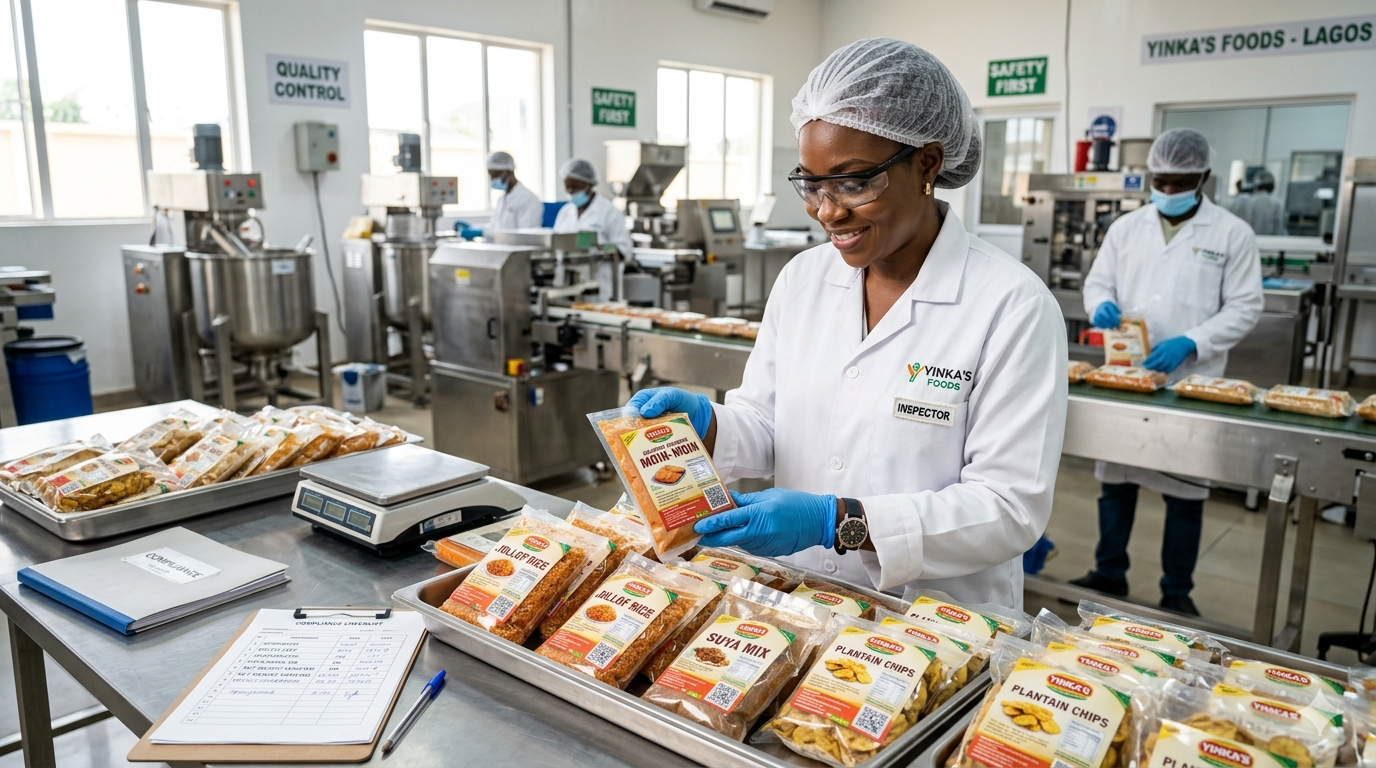
Production environments should support hygienic food handling and meet relevant safety standards.
Key considerations include:
- Adequate ventilation
- Clean water supply
- Proper waste disposal
- Pest control measures
- Safe food storage areas
Product Labeling Compliance
Food labels should provide accurate and transparent information to consumers.
Depending on the product category, labeling requirements may include:
- Product name
- Ingredient list
- Net weight or volume
- Manufacturer information
- Batch identification
- Manufacturing date
- Expiry or best-before date
- Storage instructions
Documentation and Record Keeping
Food businesses should maintain accurate records related to:
- Production processes
- Quality control activities
- Supplier information
- Inventory management
- Cleaning and sanitation schedules
Proper documentation supports both compliance and operational efficiency.
Understanding Good Manufacturing Practice (GMP)
Good Manufacturing Practice (GMP) refers to systems and procedures designed to ensure products are consistently produced and controlled according to quality standards.
GMP focuses on:
- Facility hygiene
- Equipment maintenance
- Personnel hygiene
- Production controls
- Quality assurance
- Documentation systems
Implementing GMP principles helps reduce contamination risks and improves overall product quality,Businesses can learn more through the official NAFDAC GMP resources.
Food Safety and HACCP Principles
Food safety should be a priority for every food business, regardless of size.One of the most widely recognized food safety systems is Hazard Analysis and Critical Control Point (HACCP).
HACCP is a preventive approach that identifies potential food safety hazards and establishes controls to minimize risks before they affect consumers.
The HACCP framework focuses on:
- Hazard identification
- Critical control points
- Monitoring procedures
- Corrective actions
- Verification activities
- Documentation and record keeping
Even where formal certification is not required, implementing HACCP principles can significantly improve food safety performance and customer confidence.
Standard Operating Procedures (SOPs) Every Food Business Needs
As businesses grow, consistency becomes increasingly important.
Standard Operating Procedures (SOPs) help ensure that employees follow the same processes every time.
Important SOP categories include:
Food Preparation Procedures
- Ingredient handling
- Portion control
- Cooking standards
- Quality checks
Cleaning and Sanitation Procedures
- Equipment cleaning schedules
- Surface disinfection
- Waste management
- Pest control
Storage and Inventory Procedures
- Stock rotation
- Receiving inspections
- Temperature monitoring
- Inventory tracking
Well-documented SOPs reduce errors and improve operational consistency.
Financial Planning for Food Entrepreneurs
Many food businesses struggle because of poor financial management rather than poor products.
Successful food entrepreneurs regularly monitor:
- Food costs
- Packaging expenses
- Labor costs
- Transportation costs
- Utility expenses
- Equipment maintenance costs
Maintaining accurate financial records enables better decision-making and helps identify opportunities to improve profitability.
Building a Trusted Food Brand
In today’s competitive market, consumers are increasingly influenced by trust, professionalism, and consistency.
Strong food brands typically invest in:
- Professional packaging
- Quality customer service
- Consistent product quality
- Clear communication
- Reliable delivery systems
- Strong online presence
Every customer interaction contributes to brand perception.
Marketing Your Food Business in Nigeria
Digital marketing provides food businesses with cost-effective opportunities to reach customers and showcase products.
Effective strategies include:
- Maintaining active social media profiles
- Sharing high-quality product photography
- Publishing educational content
- Collecting customer reviews
- Encouraging referrals
- Building partnerships with event planners and corporate organizations
- Using WhatsApp Business for customer engagement
Marketing should focus not only on attracting customers but also on building long-term loyalty.
Common Reasons Food Businesses Fail Regulatory Inspections
Many compliance challenges result from avoidable mistakes.
Common issues include:
- Poor facility hygiene
- Inadequate documentation
- Improper labeling
- Weak sanitation procedures
- Poor storage conditions
- Lack of staff training
- Inconsistent quality control systems
Regular internal audits can help identify and correct issues before they become regulatory concerns.
Frequently Asked Questions
Does every food business require NAFDAC registration?
Requirements vary depending on the nature of the food business and the products being offered. Businesses should consult the latest NAFDAC guidelines relevant to their operations.
What is GMP?
Good Manufacturing Practice (GMP) is a quality management system designed to ensure products are consistently produced according to established standards.
What is HACCP?
Hazard Analysis and Critical Control Point (HACCP) is a preventive food safety system used to identify and control potential hazards during food production.
Can I start a food business from home?
The answer depends on the type of food business, the applicable regulations, and the ability to maintain required food safety and hygiene standards. Entrepreneurs should review current regulatory requirements before commencing operations.
Conclusion
Building a successful food business in Nigeria requires more than culinary expertise. Entrepreneurs must understand NAFDAC requirements, implement food safety systems, maintain proper documentation, and establish operational standards that support growth. Businesses that prioritize compliance, quality control, and customer trust are better positioned to compete in Nigeria’s expanding food industry. By investing in food safety, Good Manufacturing Practice (GMP), HACCP principles, and effective operational systems, food entrepreneurs can build resilient businesses that achieve sustainable long-term success.